羅家記Law Foods Group

INGREDIENT GUIDE

Ingredient guide.
Twenty-one dried ingredients,
explained.

What each ingredient is, how it tastes, how to prepare it, and which of our soups and teas use it. Names are given in English, Chinese, Cantonese (Jyutping) and Mandarin (pinyin), so you can find them in any shop.

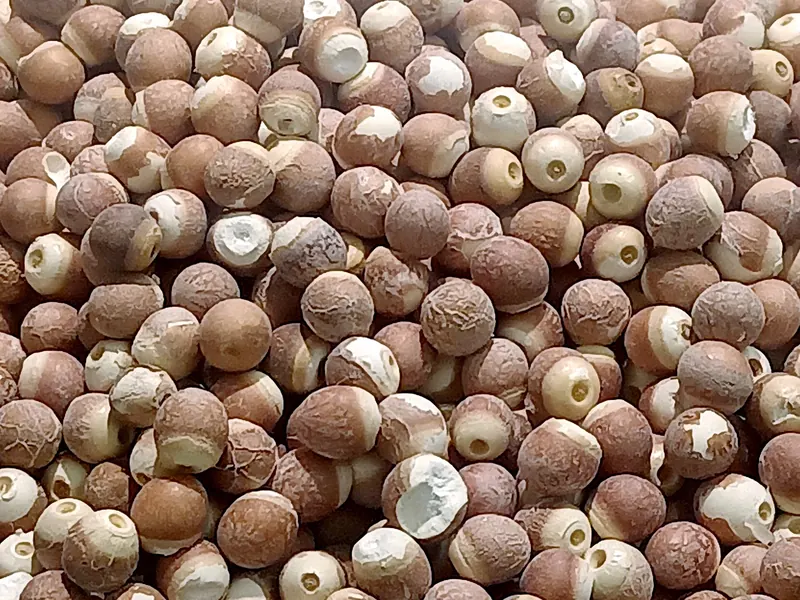
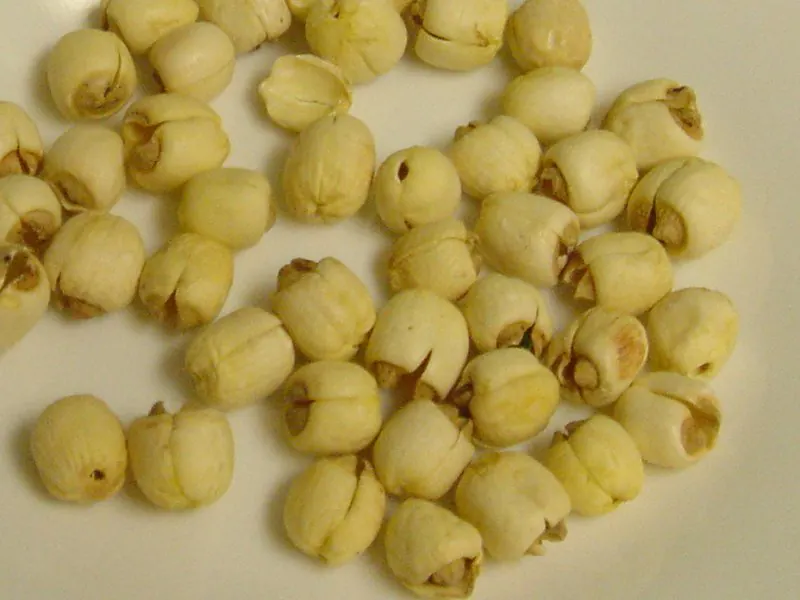
Lotus seed

Lotus seed

蓮子

Neutral 平

The dried seeds of the lotus plant. Creamy and mildly sweet once cooked, they soften without falling apart over a long simmer.

How to prepare
Rinse and soak for 30 minutes. If any seeds still have the green germ inside, push it out, as it tastes bitter.
Cantonese
lin4 zi2
Mandarin
liánzǐ
Used in
Lotus Seed & Huai Shan Soup, Ching Bo Leung
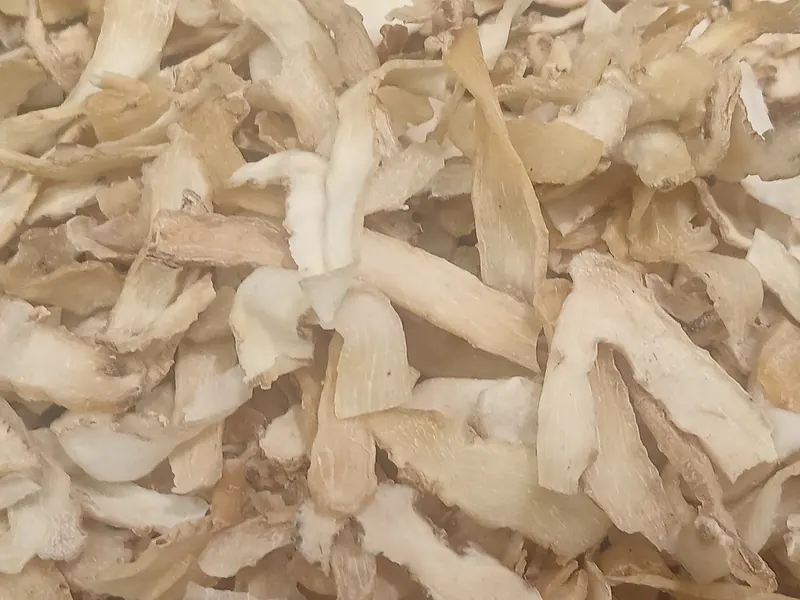
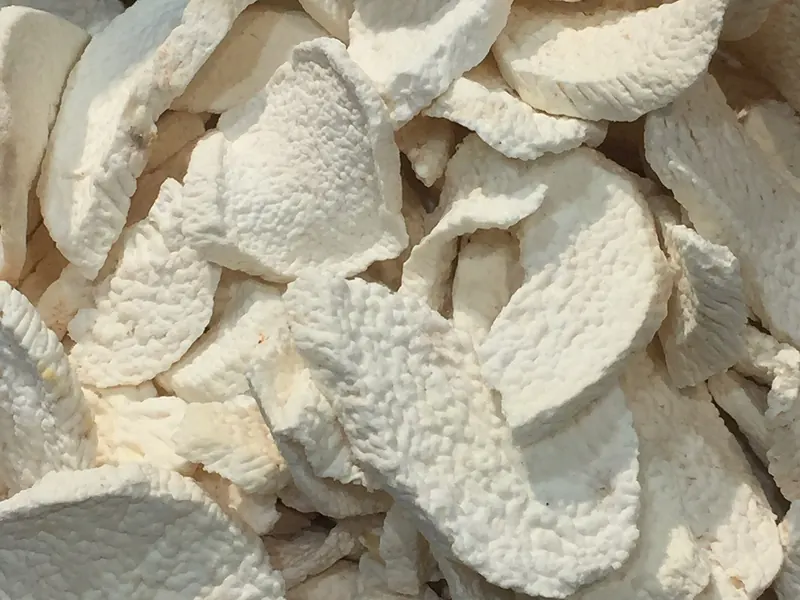
Chinese yam (huai shan)

Chinese yam (huai shan)

淮山

Neutral 平

Sliced and dried Chinese yam root. Chalky white and starchy, it gives soups a soft body and a gentle sweetness.

How to prepare
Rinse and soak for 15–20 minutes before adding to the pot.
Cantonese
waai4 saan1
Mandarin
huáishān
Used in
Lotus Seed & Huai Shan Soup, Ching Bo Leung
Fox nut (euryale seed)

Fox nut (euryale seed)

芡實

Neutral 平

Seeds of the prickly water lily, also called euryale seed or gorgon nut. Firm and slightly chewy, with a clean, nutty taste.

How to prepare
Rinse and soak for 30 minutes. They hold their shape, so they suit long simmers.
Cantonese
him3 sat6
Mandarin
qiànshí
Used in
Lotus Seed & Huai Shan Soup, Ching Bo Leung

Goji berry

枸杞

Neutral 平

Small, bright red dried berries with a sweet, slightly tangy taste. Used in both soups and teas.

How to prepare
Rinse briefly; don't soak. Add them in the last 15 minutes of a soup so they stay plump and sweet.
Cantonese
gau2 gei2
Mandarin
gǒuqǐ
Used in
Lotus Seed & Huai Shan Soup, Shiitake & Cordyceps Flower Soup, Chrysanthemum & Goji Tea, Solomon’s Seal, Lily Bulb & Goji Tea, Longan, Red Date & Goji Tea

Read the full goji berry guide: origin, safety and cooking

Good to know: If you take blood-thinning medication such as warfarin, check with your doctor before eating goji regularly.

Job’s tears (coix seed)

薏米

Cooling 涼

A large, pearly grain also known as coix seed. It is sometimes sold as “Chinese pearl barley”, but it comes from a different plant to barley.

How to prepare
Rinse and soak for 1 hour, or overnight for a softer texture.
Cantonese
ji3 mai5
Mandarin
yìmǐ
Used in
Ching Bo Leung
Solomon’s seal

Solomon’s seal

玉竹

Neutral 平

The dried, sliced rhizome of Solomon’s seal. Translucent and lightly sweet, it adds a soft background flavour to clear soups and teas.

How to prepare
Rinse and soak for 10 minutes.
Cantonese
juk6 zuk1
Mandarin
yùzhú
Used in
Ching Bo Leung, Solomon’s Seal, Lily Bulb & Goji Tea

Glehnia root (sha shen)

沙參

Cooling 涼

Thin, pale dried roots and a standard part of Cantonese soup mixes. Mild and slightly sweet.

How to prepare
Rinse and soak for 10 minutes.
Cantonese
saa1 sam1
Mandarin
shāshēn
Used in
Ching Bo Leung
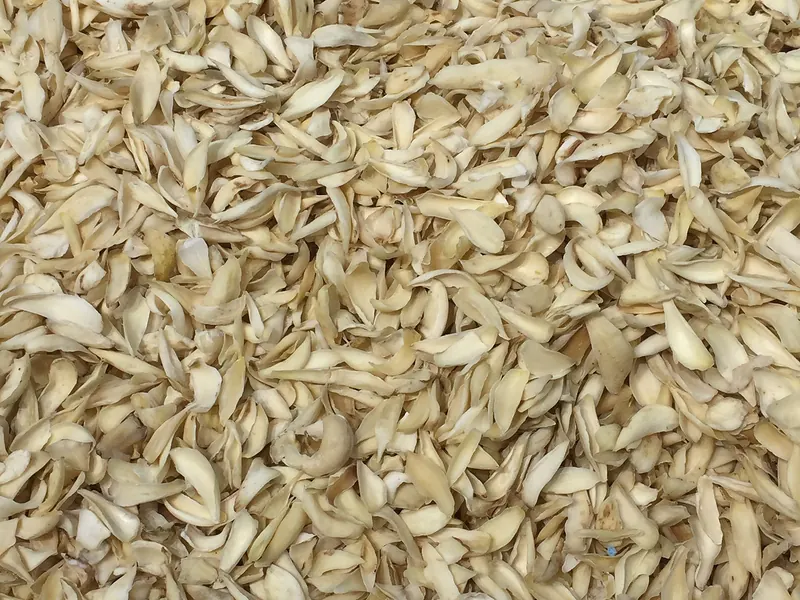
Lily bulb

Lily bulb

百合

Cooling 涼

Dried scales of the edible lily bulb. Ivory coloured, with a soft texture and a faint, pleasant bitterness.

How to prepare
Rinse and soak for 15–20 minutes. Add it for the last hour of a soup so the scales keep their shape.
Cantonese
baak3 hap6
Mandarin
bǎihé
Used in
Pear & Lily Bulb Soup, Ching Bo Leung, Solomon’s Seal, Lily Bulb & Goji Tea

Snow fungus

雪耳

Neutral 平

Also called white fungus or silver ear. A frilly, pale fungus that turns soft and jelly-like when cooked, giving soup a silky texture.

How to prepare
Soak for 20 minutes until fully expanded, trim off the hard yellow base, then tear into small pieces.
Cantonese
syut3 ji5
Mandarin
xuě’ěr
Used in
Pear & Lily Bulb Soup

Read the full snow fungus guide: origin, safety and cooking

Dried sugar cane

竹蔗

Cooling 涼

Dried, split lengths of bamboo cane: the slender, green-skinned sugar cane used for Cantonese drinks rather than for chewing.

How to prepare
Rinse well. The pieces go straight into the pot and are strained out before serving.
Cantonese
zuk1 ze3
Mandarin
zhúzhè
Used in
Sugar Cane & Water Chestnut Soup

Imperata root

茅根

Cooling 涼

The dried roots of cogon grass. Straw coloured and lightly sweet, they are the classic partner to sugar cane in Hong Kong summer drinks.

How to prepare
Rinse well and strain out before serving.
Cantonese
maau4 gan1
Mandarin
máogēn
Used in
Sugar Cane & Water Chestnut Soup
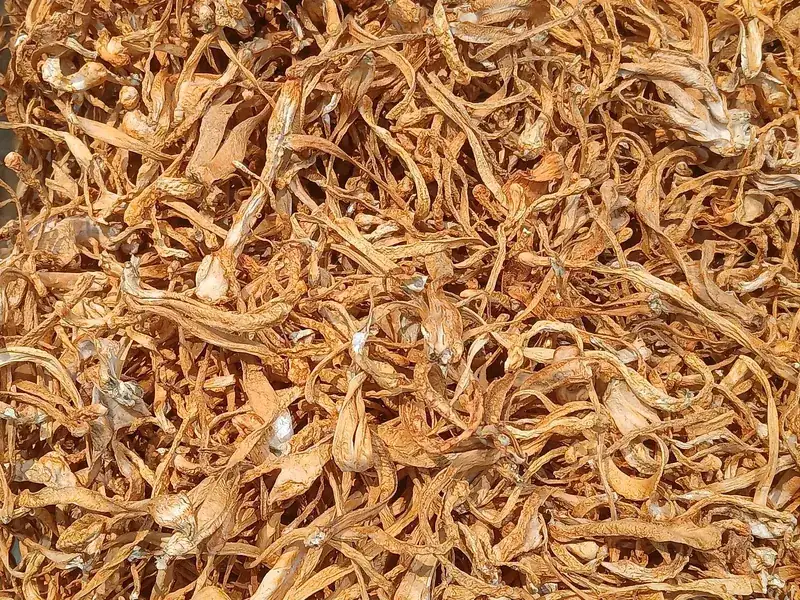
Cordyceps flower

Cordyceps flower

蟲草花

Neutral 平

Golden-orange strands of a cultivated mushroom, Cordyceps militaris, grown on grain. Despite the name it is not wild cordyceps; it is an everyday soup ingredient with a savoury flavour.

How to prepare
Rinse and soak for 10 minutes. The soaking water can go into the pot too.
Cantonese
cung4 cou2 faa1
Mandarin
chóngcǎohuā
Used in
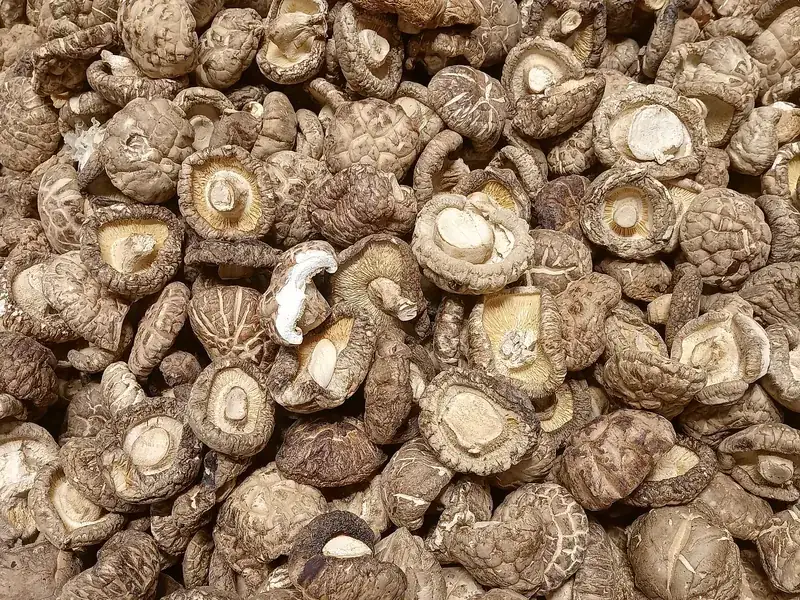
Shiitake & Cordyceps Flower Soup
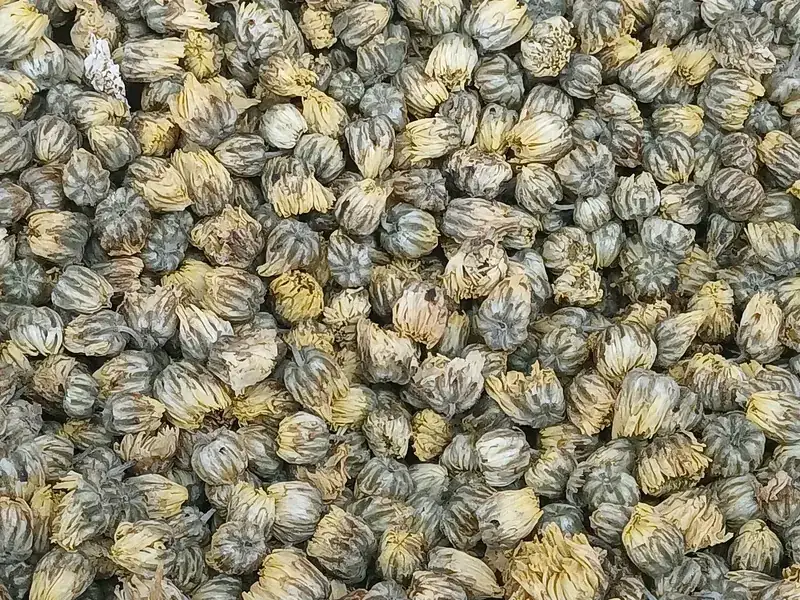
Chrysanthemum

Chrysanthemum

菊花

Cooling 涼

Dried chrysanthemum flowers. Unopened buds (胎菊, toi guk) brew a sweeter, gentler cup than open flowers.

How to prepare
Rinse briefly and steep in water just off the boil (85–95 °C). Fully boiling water makes it bitter.
Cantonese
guk1 faa1
Mandarin
júhuā
Used in
Chrysanthemum & Goji Tea

Good to know: Chrysanthemum is in the daisy family. Avoid it if you are allergic to daisies or ragweed.

Dang gui (Chinese angelica)

Dang gui (Chinese angelica)

當歸

Warming 暖

The dried root of Chinese angelica: strongly aromatic, bittersweet, and used in small amounts in warming soups.

How to prepare
Rinse briefly; there’s no need to soak. Use only 5–10 g for a whole pot.
Cantonese
dong1 gwai1
Mandarin
dāngguī

Read the full dang gui guide: origin, safety and cooking

Good to know: Don’t use dang gui during pregnancy. If you take blood thinners such as warfarin, check with your doctor first.

Astragalus root (huang qi)

Astragalus root (huang qi)

黃芪

Warming 暖

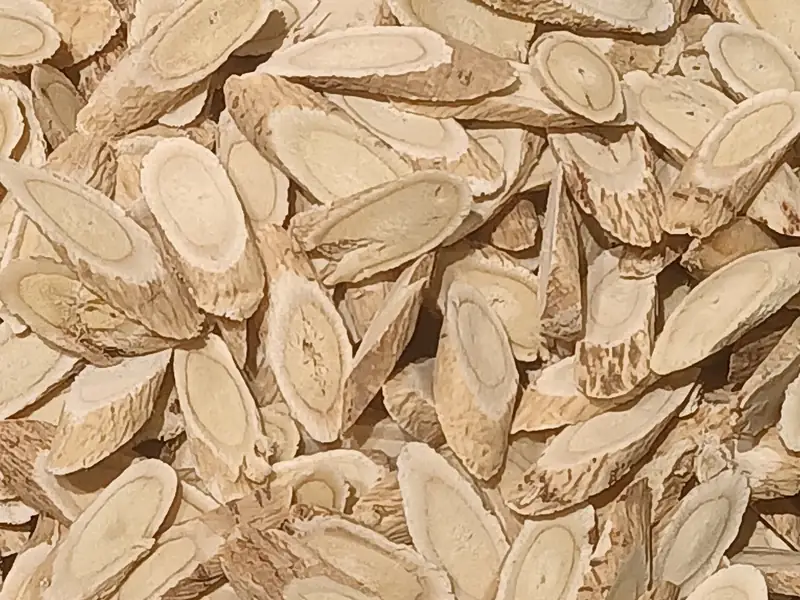
Long, pale slices of a dried root with a mild, sweet, bean-like taste. A staple of Cantonese cool-weather soup packs.

How to prepare
Rinse and add at the start. Simmer 1½–3 hours, then remove the fibrous slices.
Cantonese
wong4 kei4
Mandarin
huángqí

Read the full astragalus root guide: origin, safety and cooking

Good to know: If you take immunosuppressant medicine or have an autoimmune condition, check with your doctor first.

Dried scallop (conpoy)

Dried scallop (conpoy)

瑤柱

Neutral 平

The dried adductor muscle of the scallop: golden, intensely savoury, and a Cantonese luxury ingredient.

How to prepare
Soak in just enough water to cover for 1–2 hours, then shred. Use the soaking liquid too.
Cantonese
jiu4 cyu5
Mandarin
yáozhù

Read the full dried scallop guide: origin, safety and cooking

Good to know: Dried scallop is a shellfish. Avoid it if you have a shellfish allergy.

Common questions

What do cooling, neutral and warming mean?

In Cantonese food culture, each ingredient is traditionally described by its nature: cooling (涼), neutral (平) or warming (暖). This guides which soups and teas people choose for the season, with cooling pots for hot, humid weather and warming ones for winter. It describes tradition, not serving temperature, and it is not medical advice.

Is cordyceps flower the same as cordyceps?

No. Cordyceps flower (蟲草花) is a cultivated mushroom, Cordyceps militaris, grown on grain. Wild cordyceps (冬蟲夏草) is a different and far more expensive product. Cordyceps flower is an everyday soup ingredient valued for its savoury flavour.

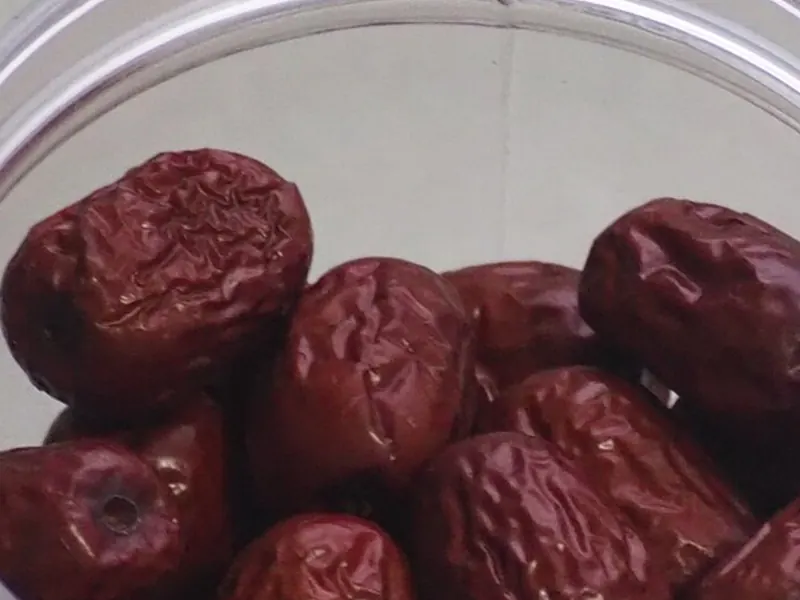
What is the difference between red dates and honey dates?

Both are jujubes. Red dates (紅棗) are simply dried, and are chewy and mildly sweet. Honey dates (蜜棗) are candied in syrup until golden, and are used mainly to sweeten Cantonese soups.

What is huai shan?

Huai shan (淮山) is dried, sliced Chinese yam. It is starchy and mildly sweet, and gives soups a soft, rounded body.

How should I store dried ingredients?

Keep them in an airtight container in a cool, dry, dark cupboard. In humid weather, keep goji, longan and dates in the fridge so they stay soft and free of pests.

Why don’t your recipes include apricot kernels?

Apricot kernels (南北杏) are traditional in some Cantonese soups, but the retail sale of raw apricot kernels is prohibited under Australia’s Food Standards Code, so our recipes leave them out.
See how we use them.