Origin
Longan is a subtropical tree related to the lychee. Its name means “dragon eye”, after the dark seed that shows through the translucent flesh of the fresh fruit.
Most dried longan comes from Guangdong (especially Gaozhou), Guangxi and Fujian (Putian, known for traditional smoke-baked longan), and from Thailand, a major exporter of dried longan flesh. Fruit is harvested in July and August, then dried in the shell or peeled and dried as flesh.
Traditional use
Dried longan sweetens teas and Cantonese sweet soups (糖水), often with red dates, goji, lotus seeds or a boiled egg. It also appears in savoury soups such as Ching Bo Leung.
In Chinese food tradition it is classed as warming, so it is used most in the cooler months. Many Cantonese families use less of it in hot weather, or balance it with cooling ingredients.
Safety
- Sugar: dried longan is very high in natural sugar. If you are managing diabetes, count it like other dried fruit.
- Choking: whole dried longan in the shell has a hard round seed. Remove it before giving longan to children.
- Mould: the sticky flesh absorbs moisture. Keep it airtight, refrigerate it in humid weather, and throw it out if it smells sour or shows mould.
- Sulphites: some light-coloured longan is treated with sulphites. If you are sensitive, check the label.
How to cook
- Rinse briefly to remove dust.
- Use 10–20 g for a 2–3 litre soup, or 5–8 pieces for a pot of tea.
- Add it in the last 30–60 minutes of a long soup: it sweetens the pot quickly.
- For tea, simmer with red dates for 15–20 minutes.
How to choose and store
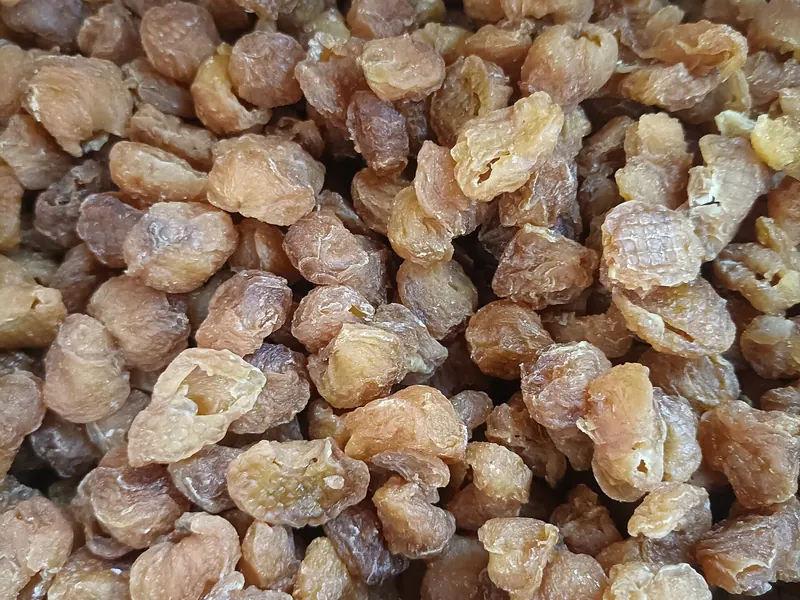
Good longan flesh is whole, dark amber, soft and fragrant, without a burnt or sour smell. Shelled longan should feel heavy, with no rattling. Store airtight, in the fridge in humid weather.
Our recipes that use it
See it in the ingredient guide
This page describes culinary and cultural tradition. It is not medical advice. If you are pregnant, breastfeeding, taking medication or managing a health condition, check with your doctor or a registered Chinese medicine practitioner before using herbal ingredients.
Last updated: