Origin
Shiitake cultivation began in China. Tradition credits Wu San Gong (吳三公) of the Longquan and Qingyuan area of Zhejiang, in the Song dynasty, with growing mushrooms on cut logs. Today China grows most of the world’s shiitake, mainly in Hubei (Suizhou), Henan (Xixia), Zhejiang and Fujian. Japan, especially Ōita on Kyūshū, is known for log-grown dried shiitake.
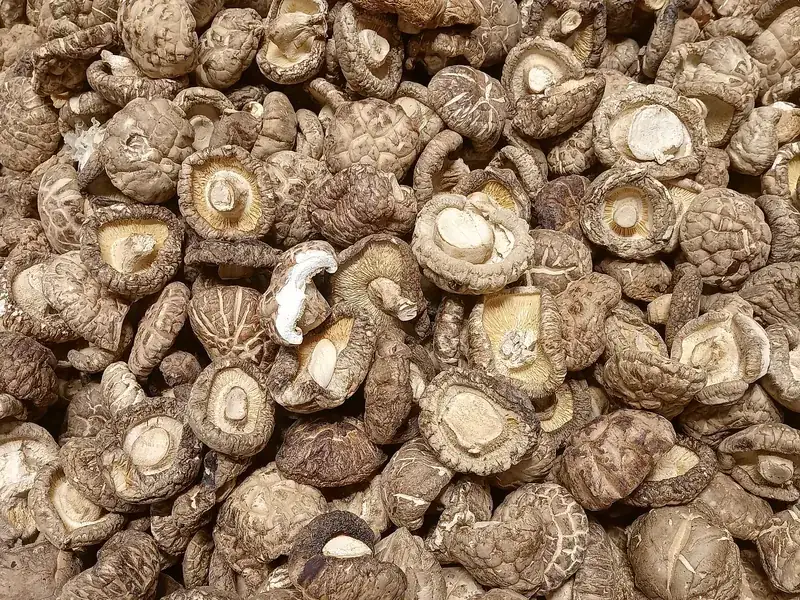
Flower shiitake (花菇) form when caps grow slowly in cold, dry weather: the surface cracks into a white, flower-like pattern, and the caps are thicker and meatier. Drying concentrates the savoury flavour.
Traditional use
Dried shiitake are a mainstay of Cantonese cooking: braised for Lunar New Year, simmered in soups, steamed with chicken, or stuffed with minced meat or fish paste. They also make a rich vegetarian stock.
In Chinese food tradition shiitake are classed as neutral, so they are used all year round.
Safety
- Cook thoroughly: raw or undercooked shiitake can cause shiitake dermatitis in some people, an itchy, streaky rash that appears a day or two after eating. Well-cooked shiitake rarely causes it.
- Mushroom allergy: avoid shiitake if you are allergic to mushrooms.
- Gout: mushrooms contain moderate amounts of purines. If you manage gout, keep portions moderate.
- Long soaks: if soaking for more than 2 hours, do it in the fridge.
How to cook
- Rinse the caps and soak them in cold water in the fridge for 2–6 hours (best flavour), or in warm water for 30–60 minutes if you’re short of time.
- Squeeze gently, cut off the tough stems (keep them for stock), and slice or leave whole.
- Strain the soaking water through a fine sieve to remove grit, and add it to the pot.
- Simmer 1–2 hours in soups, or braise 30–60 minutes until tender.
How to choose and store
Choose thick, dry caps with curled edges, pale gills and a smoky, savoury smell. For flower shiitake, look for deep white cracks on a brown cap. Store airtight in a cool, dry place; refrigerate in humid weather.
Our recipes that use it
See it in the ingredient guide
This page describes culinary and cultural tradition. It is not medical advice. If you are pregnant, breastfeeding, taking medication or managing a health condition, check with your doctor or a registered Chinese medicine practitioner before using herbal ingredients.
Last updated: