Origin
Dang gui grows in cool, high mountain country in western China. The most famous source is Min County (岷縣) in Gansu, at more than 2,000 metres, which supplies a large share of China’s dang gui. Other parts of Gansu, Yunnan, Sichuan and Hubei also grow it.
It is a slow crop. Seedlings are raised in the first year and transplanted, and the roots are dug in autumn of the second year. They are traditionally dried slowly over low, smoky fires, then sliced. The name means “ought to return”.
Traditional use
Dang gui has a powerful aroma, so a few slices flavour a whole pot. It is used mostly in warming winter soups and stews with chicken, duck or lamb. Dang gui, ginger and lamb soup has been recorded since the Han dynasty.
In many Chinese families, dang gui soups are traditionally prepared for women in the weeks after childbirth (坐月). In Chinese food tradition it is classed as warming.
Safety
- Pregnancy: don’t use dang gui while pregnant.
- Blood thinners: dang gui may increase the risk of bleeding with warfarin, aspirin, clopidogrel and similar medicines. Don’t combine them without your doctor’s advice, and stop dang gui at least 2 weeks before surgery.
- Bleeding: avoid it if you have heavy menstrual bleeding or a bleeding disorder.
- Hormone-sensitive conditions: if you have a hormone-sensitive condition (such as endometriosis, fibroids or some breast cancers), ask your doctor first. The evidence is unclear.
- Breastfeeding and children: there isn’t enough safety information. Ask a doctor or registered Chinese medicine practitioner first.
How to cook
- Use 5–10 g of slices for a 2–3 litre pot. More makes the soup bitter and medicinal.
- Rinse the slices briefly; there’s no need to soak them.
- Add them at the start with blanched meat, ginger and red dates, and simmer 1½–2 hours.
- Remove the slices before serving.
How to choose and store
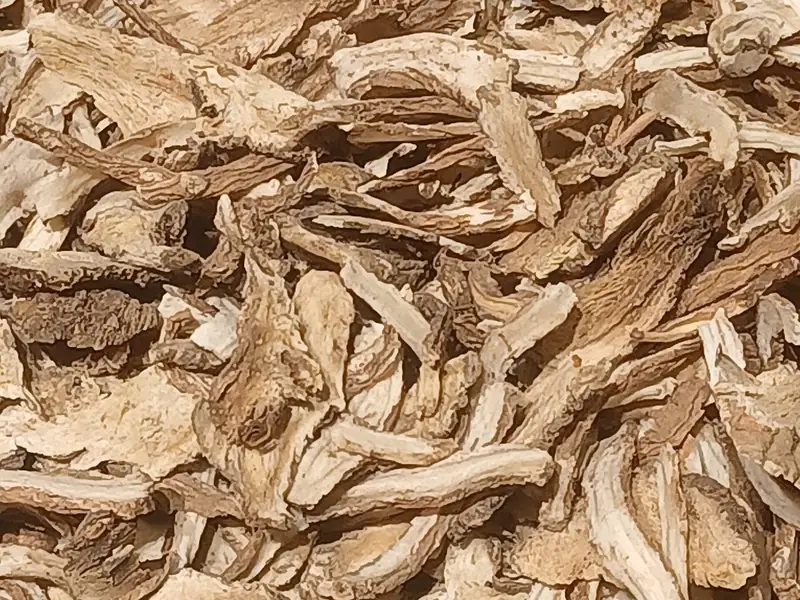
Good dang gui is pale yellow-brown inside, oily rather than dry and woody, with a strong, sweet aroma. Avoid slices that are very white with a sour smell: they may have been bleached with sulphur. Store airtight, away from light.
This page describes culinary and cultural tradition. It is not medical advice. If you are pregnant, breastfeeding, taking medication or managing a health condition, check with your doctor or a registered Chinese medicine practitioner before using herbal ingredients.
Last updated: