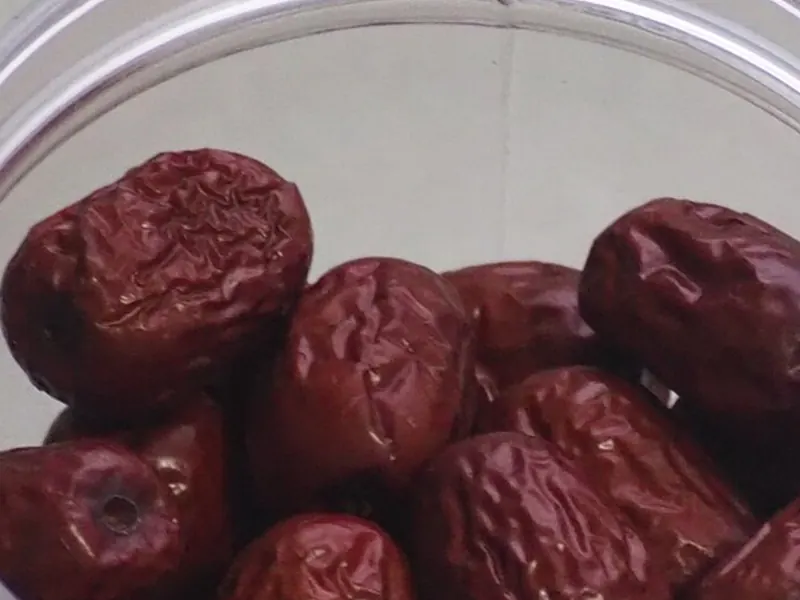
Origin
The jujube tree has been grown in northern China for more than 3,000 years and is mentioned in the Book of Songs (詩經), one of the oldest collections of Chinese poetry. It is not related to the date palm: red dates are a different fruit that happens to look similar once dried.
Today most red dates come from Xinjiang (Hotan, Ruoqiang and Aksu), Hebei (Cangzhou), Shandong, Shanxi and Henan (Xinzheng). Hot, dry summers and large swings between day and night temperatures give the sweetest, thickest-fleshed fruit. Dates are picked in September and October, then sun-dried or oven-dried.
Traditional use
Red dates add a rounded natural sweetness to soups and teas, so most Cantonese recipes need no sugar. In Chinese food tradition they are classed as warming, so they appear most often in cool-weather soups and are added in small numbers to balance cooling ingredients.
Their red colour stands for good fortune. They are a fixture at Lunar New Year and weddings, where 棗 (zǎo) puns on 早 (early) in the blessing 早生貴子, “may you soon have children”. Red date soups and teas are also traditional for new mothers during the first month after birth.
Safety
- Sugar: dried red dates are mostly natural sugar by weight. If you are managing diabetes, count them like any other dried fruit.
- Choking: the stone is hard and pointed. Remove it before giving dates to children, and don’t give whole dried dates to toddlers.
- Storage: keep them airtight. In humid weather keep them in the fridge, and throw them out if they look mouldy or smell fermented.
- Allergy: jujube allergy is rare but has been reported. Stop eating them if you notice itching or swelling.
How to cook
- Rinse the dates under running water.
- Tear them open, cut two or three slits, or remove the stone. Whole dates float and give very little flavour.
- Use 4–8 dates for a 2–3 litre soup pot, or 3–4 for a pot of tea.
- Add them at the start with the other dried ingredients and simmer 1–3 hours for soup, or 20–30 minutes for tea.
How to choose and store
Choose plump, deep red dates with shiny, evenly wrinkled skin. Avoid cracked fruit, white powdery patches or a sour smell. Store airtight in a cool, dry cupboard, or in the fridge in humid weather.
Our recipes that use it
See it in the ingredient guide
This page describes culinary and cultural tradition. It is not medical advice. If you are pregnant, breastfeeding, taking medication or managing a health condition, check with your doctor or a registered Chinese medicine practitioner before using herbal ingredients.
Last updated: